
Dry Aged fish - exclusively us
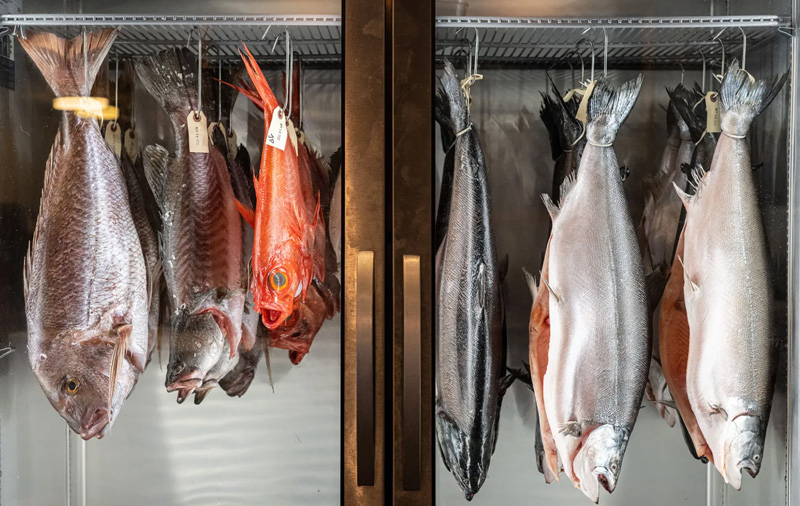
The Art of Dry-Aged Fish: A New Dimension of Flavor
Dry-aged fish (or matured fish) represents the pinnacle of modern seafood gastronomy. Similar to high-quality beef, certain species of fish undergo a meticulous dry-aging process that transforms their texture and elevates their flavor profile to an entirely new level.
How does dry-aging work?
After being caught, the fish is cleaned and hung in specialized aging refrigerators with controlled temperature and humidity (often for 7 to 14 days or longer). During this process:
Enzymes break down proteins and connective tissues, which tenderizes the meat.
Evaporation of water intensifies the fish's natural flavor.
Fat oxidation adds a complex aroma to the meat, similar to aged beef.
Is it safe to consume raw dry-aged fish?
Yes, dry-aged fish is commonly consumed raw and is considered a delicacy in modern gastronomy for sashimi, crudo, or nigiri. Aging even removes certain undesirable odors found in fresh fish and enhances the depth of flavor.
However, to ensure consumption is safe and pleasant, specific conditions must be met:
- Strict hygiene and technology: The fish must be aged in specialized refrigerators with UV air sterilization and precise humidity and temperature control (around 1–3 °C) to prevent bacterial growth.
- Aging duration: For raw serving, the ideal period is usually 7 to 20 days. While the Umami flavor intensifies significantly with longer aging (over 20 days), the texture of the meat may become too tough, which might not be pleasant in its raw state.
- Preparation: Before serving, the outer dried layers (the oxidized layer) are usually trimmed away, revealing clean, flavor-concentrated meat.
What are the main differences between fresh and aged fish?
| Features | Fresh fish | Dry-Aged Fish |
|---|---|---|
| Flavor | Delicate, clean, with a light hint of the sea. | Concentrated, rich, with umami undertones (reminiscent of butter or nuts). |
| Texture | Soft, fragile, even watery. | Firmer, meatier; muscle fibers are relaxed thanks to enzymes. |
| Moisture | High water content in the meat. | Lower water content (approx. 25–35% loss), which firms the structure. |
| Skin | Moister, harder to achieve extreme crispiness. | Very dry, allowing for perfectly crispy skin in a matter of moments. |
Does aged fish require a different cooking method?
Yes, cooking aged fish requires a different approach because the aging process fundamentally changes the water content and meat structure. While you fight moisture with fresh fish, with aged fish you work with a concentrated product that reacts to heat much faster.
Main differences in heat treatment:
- Cooking speed: Aged fish has 25–35% less water, meaning it heats up much faster. It is critical to shorten the cooking time to prevent the meat from becoming dry.
- Skin crispiness: Thanks to the dry surface, you can achieve extremely crispy skin on aged fish within moments. Fresh fish often "splatters" in the pan and the skin tends to steam, whereas aged fish skin begins to fry to a golden brown immediately.
Suitable techniques:
- Searing / Grilling: Ideal for aged fish. The meat holds its shape better, doesn't fall apart, and can withstand higher heat.
- Poaching / Steaming: Less suitable. Aged fish can feel too firm or tough when steamed. These delicate techniques are better suited for fresh fish, which retain their natural juiciness.
- Flavor concentration: Since the flavor of aged fish is very intense (umami), it is recommended to use less seasoning. Quality salt and olive oil are enough to let the notes created by aging stand out.
- Pairing with fats: Aged fish pairs excellently with rich ingredients like butter or foie gras, as its deep flavor can compete with these bold accompaniments.
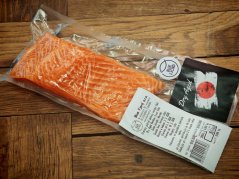
Dry Aged Sea rainbow trout fillet with skin (aged for at least 10 days)
Out of stock
190,40 Kč
222,40 Kč
(1 190 Kč/kg)
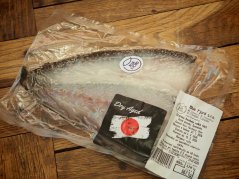
Dry Aged Turbot fillet with skin (aged for at least 10 days)
Out of stock
498 Kč
538 Kč
(2 490 Kč/kg)
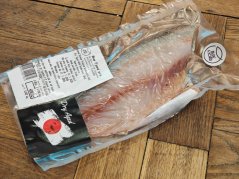
Gilthead seabream fillet with skin 150-200g Wild
Out of stock
394,20 Kč
412,20 Kč
(2 190 Kč/kg)
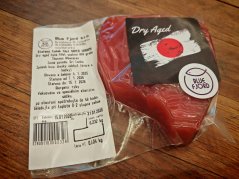
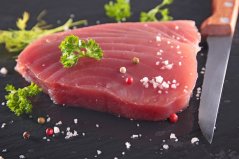
Yellowfin Tuna filet Super Sashimi AAA grade (aged for at least 8 days)
In stock
378 Kč
498 Kč
(1 890 Kč/kg)

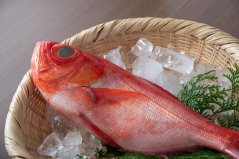
Dry aged Alfonsino 0,5 - 0,7kg (aged for at least 14 days)
Not available
1 445 Kč
1 595 Kč
(2 890 Kč/kg)
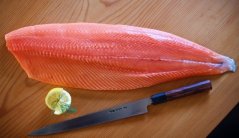
Dry aged Wild pacific salmon fillet with skin (Chinook King) aged for at least 14 days
In stock
558 Kč
598 Kč
(2 790 Kč/kg)
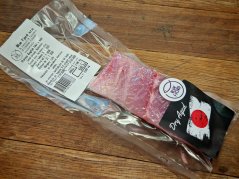
Dry Aged yellowtail amberjack fillet with skin (Kingfish) 200-500g (aged for at least 14 days)
Out of stock
498 Kč
538 Kč
(2 490 Kč/kg)
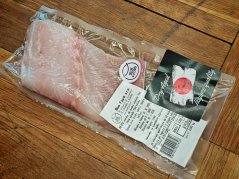
Dry Aged Wild Seabass fillet with skin (aged for at least 14 days)
In stock
498 Kč
518 Kč
(2 490 Kč/kg)
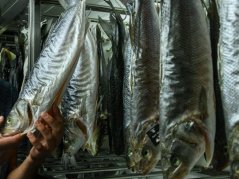
Dry Aged wild Seabass 1,5-2kg (aged for at least 14 days)
Out of stock
756 Kč
796 Kč
(1 890 Kč/kg)
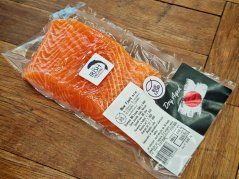
Dry Aged organic salmon fillet with skin (aged for at least 14 days)
In stock
298 Kč
318 Kč
(1 490 Kč/kg)
Dry Aged wild Seabass 600-800g (aged for at least 14 days)
Out of stock
894 Kč
1 014 Kč
(1 490 Kč/kg)